
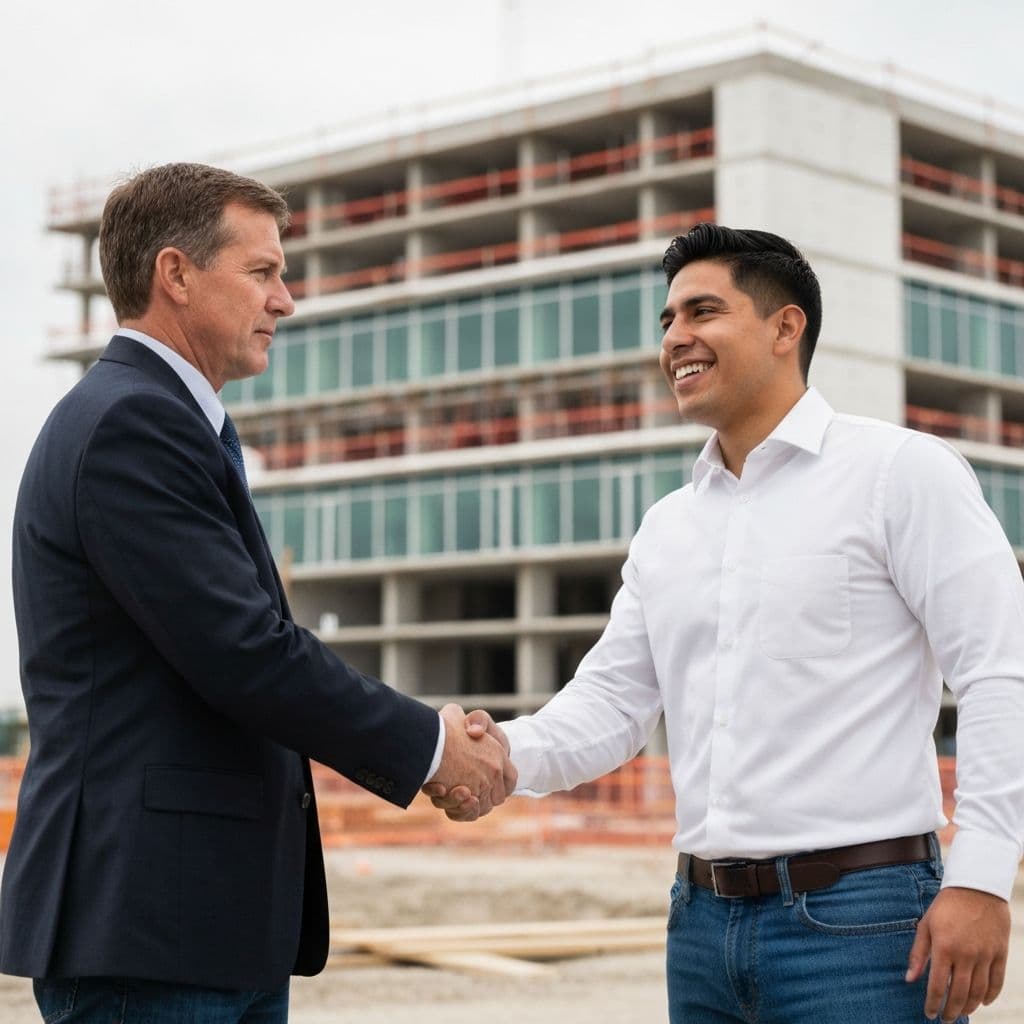
The Gap Between Ownership and Execution
In every construction project, there is a gap between what the owner wants and what the project team delivers. This gap is not caused by bad intentions — architects, contractors, and engineers are generally competent professionals who want to do good work. The gap exists because of structural incentives, information asymmetry, and the simple reality that no one on the project team is contractually obligated to prioritize the owner's interests above their own.
The architect's primary obligation is to their design. The contractor's primary obligation is to their contract and their profit margin. The construction manager's primary obligation is to the schedule and the budget as defined in their agreement. Each of these parties serves the project, but none of them serves the owner exclusively.
Owner-side project leadership closes this gap. It provides the owner with a dedicated professional or team whose sole purpose is to ensure that the project delivers on the owner's goals — not just the project's contractual requirements, but the institutional outcomes the owner actually needs.
What Owner-Side Leadership Looks Like
Owner-side project leadership is not a title or a reporting relationship — it is a function that operates across every phase of the project lifecycle. Its activities vary by phase but share a common purpose: ensuring that every significant decision reflects the owner's priorities and protects the owner's investment.
During Planning
Owner-side leadership helps the institution define what success looks like before engaging architects or contractors. This includes:
- Translating institutional needs into a clear project scope and program
- Establishing a realistic budget based on current market conditions, not outdated assumptions
- Evaluating delivery methods and recommending the approach best suited to the project's characteristics
- Defining governance structures and stakeholder engagement processes
This planning work is the highest-value activity in the project lifecycle. Decisions made during planning have the greatest impact on cost, schedule, and quality. Strategic planning and advisory services ensure that these decisions are informed by experience and data, not guesswork and aspiration.
During Design
Owner-side leadership ensures that the design process produces documents that are buildable, within budget, and aligned with the owner's program. Specific activities include:
- Reviewing design documents at each milestone for scope alignment, constructability, and cost implications
- Managing the interface between the design team and the owner's operational staff
- Coordinating independent cost estimates to verify the design team's budget projections
- Facilitating value engineering that reduces cost without sacrificing essential program elements
- Ensuring that regulatory requirements are addressed proactively, not reactively
Design is where cost commitments are made. By the time construction documents are complete, approximately 80% of the project's cost is determined. Owner-side leadership during design ensures that these commitments serve the owner's interests.
During Construction
Owner-side leadership during construction focuses on protecting the owner's contractual rights and ensuring that the built product matches the design intent. Activities include:
- Reviewing and processing pay applications to ensure the owner pays only for completed, conforming work
- Evaluating change order requests for validity, pricing, and schedule impact
- Monitoring construction quality through regular site inspections and testing oversight
- Managing the project schedule, holding contractors accountable for milestone performance
- Facilitating dispute resolution before issues escalate to claims or litigation
Construction management and quality control performed from the owner's perspective is fundamentally different from construction management performed by the contractor. The owner's representative has no financial interest in approving change orders, accepting marginal quality, or ignoring schedule slippage. Their incentive is to protect the owner — full stop.
During Closeout and Transition
The final phase of a project is often the most neglected by the construction team, whose attention is already shifting to the next project. Owner-side leadership ensures that:
- Punch list items are completed to the owner's satisfaction, not just the contractor's definition of "substantial completion"
- Building systems are commissioned and verified to perform as designed under actual operating conditions
- Warranty documentation is complete and organized for the owner's facilities team
- Training is provided for building operations staff
- The transition from construction to operations is managed as a deliberate process, not an improvised handoff
For projects like the Jake M. Godbold City Hall Annex, where the completed facility must serve the public immediately upon opening, a smooth transition from construction to operations is essential.
The Measurable Impact of Owner-Side Leadership
The value of owner-side project leadership is not theoretical. It is reflected in measurable project outcomes:
Cost performance. Projects with dedicated owner-side leadership consistently achieve better cost outcomes than comparable projects without it. The mechanism is straightforward: experienced owner-side professionals catch scope creep earlier, negotiate change orders more effectively, and prevent the rework that results from inadequate coordination.
Schedule performance. Owner-side leadership maintains schedule accountability by monitoring contractor performance against milestones, identifying potential delays before they occur, and facilitating the decision-making that keeps the project moving. Without this function, schedule slippage accumulates incrementally until it becomes unrecoverable.
Quality outcomes. Owner-side quality oversight ensures that the built product meets the design intent and the owner's expectations. This goes beyond code compliance — it includes the fit, finish, and performance characteristics that determine the owner's satisfaction with the completed facility.
Risk mitigation. Owner-side leadership identifies and manages risks proactively, rather than responding to them reactively. This includes contractual risks, financial risks, schedule risks, and the reputational risks that institutional owners face when projects go wrong publicly.
When Internal Staff Are Not Enough
Many institutional owners have capable facilities or project management staff. The question is whether those staff have the bandwidth, the specialized expertise, and the institutional independence to serve as effective owner-side project leaders on a major capital project.
Internal staff are typically managing ongoing operations in addition to the capital project. They may lack experience with the specific project type — a university facilities director may be expert in campus maintenance but have limited experience with new construction procurement. And they may face institutional pressures that compromise their independence — a staff member who must work with the same architect or contractor on future projects may hesitate to press hard on current project issues.
External owner-side project leadership addresses these limitations. An external advisor brings dedicated bandwidth, specialized experience, and institutional independence. They can advocate for the owner's interests without concern for internal politics or ongoing relationships.
The Investment Perspective
Owner-side project leadership typically costs 2-5% of construction cost, depending on project complexity and the scope of services provided. This investment should be evaluated not as an expense but as a risk mitigation and value protection strategy.
Consider the alternative: a $50M construction project without dedicated owner-side leadership faces a meaningfully higher probability of cost overruns, schedule delays, and quality deficiencies. Even a modest 5% cost overrun — $2.5M — exceeds the typical cost of owner-side leadership for the entire project.
For corporate and civic organizations, where construction budgets are funded by shareholders or taxpayers, the accountability that owner-side leadership provides is as valuable as the cost savings it delivers.
Conclusion
Owner-side project leadership is not an added layer of management. It is the mechanism through which institutional owners protect their investments and ensure that their capital projects deliver the outcomes they need. In a construction industry where every other party has competing interests, owner-side leadership provides the one thing the owner cannot get from any other team member: undivided loyalty to the owner's success.
For organizations planning a significant capital project, the decision to engage dedicated owner-side leadership is one of the most consequential — and most cost-effective — decisions they will make. Our team is ready to discuss how owner-side project leadership can improve your project's outcomes.